

The 8-10 Month Sleep Regression: What’s Actually Happening (and How to Survive It)
If your baby suddenly starts fighting naps, waking more overnight, or struggling with separation around 8–10 months, you may be in the middle of the 8 month sleep regression. While exhausting, this phase is often linked to major developmental leaps like crawling, pulling up, increased mobility, and growing awareness of the world around them. In this post, we’ll cover what causes the 8 month sleep regression, common signs to watch for, and practical tips to help your baby (and you) get through it with confidence. This post contains affiliate links. If you purchase through these links, I may earn a small commission at no additional cost to you.
BABY SLEEP
6/20/20263 min read
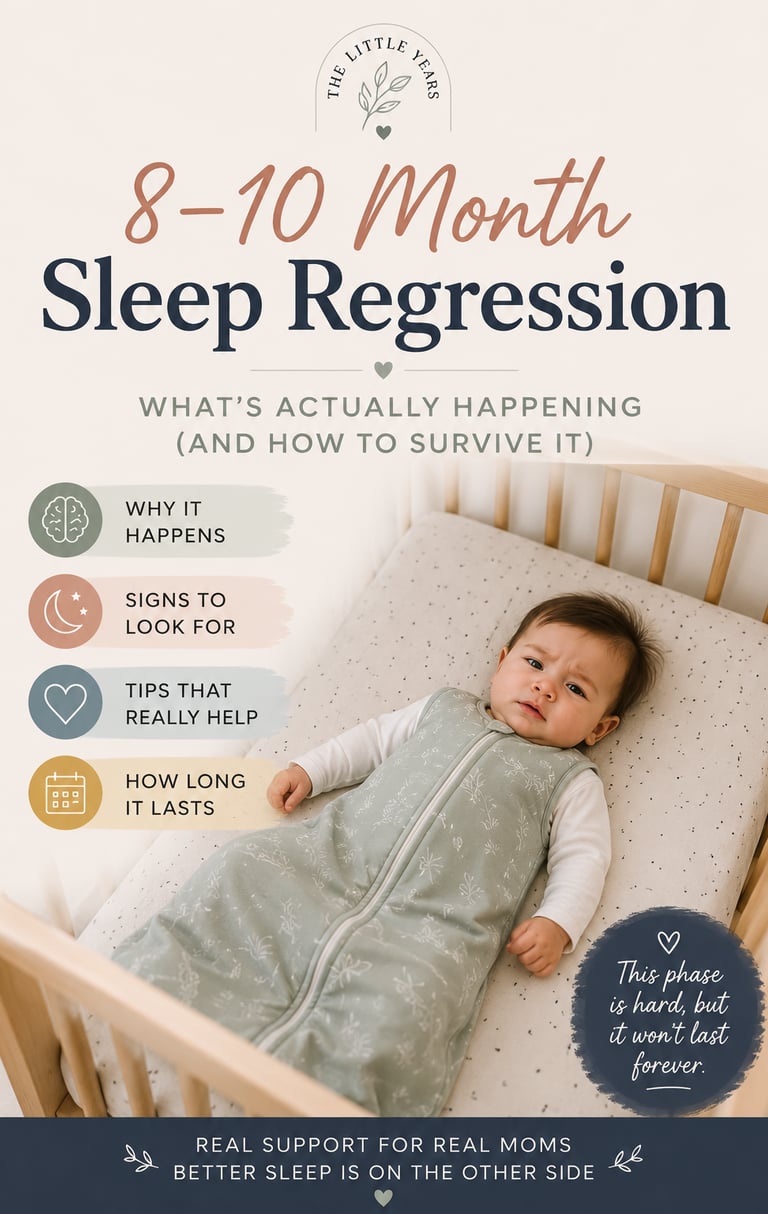
If your baby has suddenly started waking more overnight, fighting naps, needing extra comfort, or acting like they’ve forgotten how to sleep altogether, you may be dealing with the 8 month sleep regression.
Before we dive in, it’s important to know that not every baby experiences an obvious sleep regression. Some babies may go through this stage with only minor disruptions, while others seem to wake up every time you blink. The severity varies from baby to baby, and even from family to family.
The good news? Like other regressions, this phase is temporary and is often a sign that your baby is learning exciting new skills.
What Is the 8 Month Sleep Regression?
The 8 month sleep regression typically occurs sometime between 8 and 10 months of age. Unlike the 4 month regression, which is caused by a permanent change in sleep cycles, the 8 month regression is largely driven by development.
At this age, many babies are:
Crawling or learning to crawl
Pulling up to stand
Cruising along furniture
Becoming more aware of their surroundings
Experiencing separation anxiety
Practicing new skills day and night
Their brains are working overtime, which can make it harder to settle into sleep and stay asleep.
Common Signs of the 8 Month Sleep Regression
Increased Night Wakings - A baby who was previously sleeping well may suddenly begin waking multiple times overnight.
Fighting Naps - Naps may become shorter, harder to achieve, or skipped altogether.
Separation Anxiety - Your baby may become more upset when you leave the room and need extra reassurance at bedtime.
Early Morning Wake-Ups - Many parents notice their baby starting the day much earlier than usual.
Standing or Crawling in the Crib - Instead of sleeping, your baby may spend nap time practicing their newest skill.
Increased Fussiness - Because sleep is disrupted, babies may seem more tired, clingy, or emotional during the day.
How Long Does the 8 Month Sleep Regression Last?
Most sleep regressions last anywhere from 2 to 6 weeks. The timeline depends on your baby’s temperament, developmental milestones, and how quickly they adjust to their new skills. While it can feel endless in the moment, this phase does pass.
How to Survive the 8 Month Sleep Regression
Stick With Your Routine - Babies thrive on predictability. Keep naps, bedtime, and your sleep routine as consistent as possible. Even if sleep feels messy right now, maintaining familiar routines provides security and helps your baby return to normal sleep patterns more quickly.
Give Plenty of Practice During the Day - If your baby is learning to crawl, pull up, or stand, give them lots of opportunities to practice while awake. The more they master these skills during the day, the less likely they are to spend the night practicing them.
Offer Reassurance - Separation anxiety is very common at this age. Extra cuddles, a consistent bedtime routine, and responding in a way that aligns with your parenting style can help your baby feel secure.
Watch Wake Windows - Many babies around 8 months do best with wake windows of approximately 2.5–4 hours and two naps per day. An overtired baby often struggles with sleep just as much as an undertired baby. Read more about wake windows here.
Be Patient - This stage is developmental—not a sign that you’ve created bad habits or that your baby’s sleep is permanently ruined. The best thing you can do is remain consistent and remember that your baby is going through a period of enormous growth.
Final Thoughts
The 8 month sleep regression can feel exhausting, especially if your baby had been sleeping well before. But try to remember that all of those night wakings, clingy moments, and nap battles are often signs of a baby whose brain and body are developing exactly as they should.
Stay consistent, offer reassurance, and give yourself grace. This stage won’t last forever—and better sleep is on the other side.
Looking for more guidance on baby sleep? You're in the right place!
Essential Products for Sleep and Getting You Through This Phase
Check out my other articles related to this post:
The Bedtime Routine to Start at 4 Months for Better Sleep
Baby Nap Schedule By Age
The Little Years shares personal experiences and informational content only. This site may contain affiliate links. As an Amazon Associate, I earn from qualifying purchases.