

Baby Wake Windows By Age
Learn the ideal baby wake windows by age from newborn to 12 months. This simple chart helps you time naps and bedtime, avoid overtiredness, and build a sleep routine that supports better sleep for your baby.
4/17/20262 min read
If you’ve ever thought, “Should they be awake or asleep by now?”—you’re not alone. Wake windows can feel confusing at first, but they’re one of the simplest ways to start understanding your baby’s rhythm.
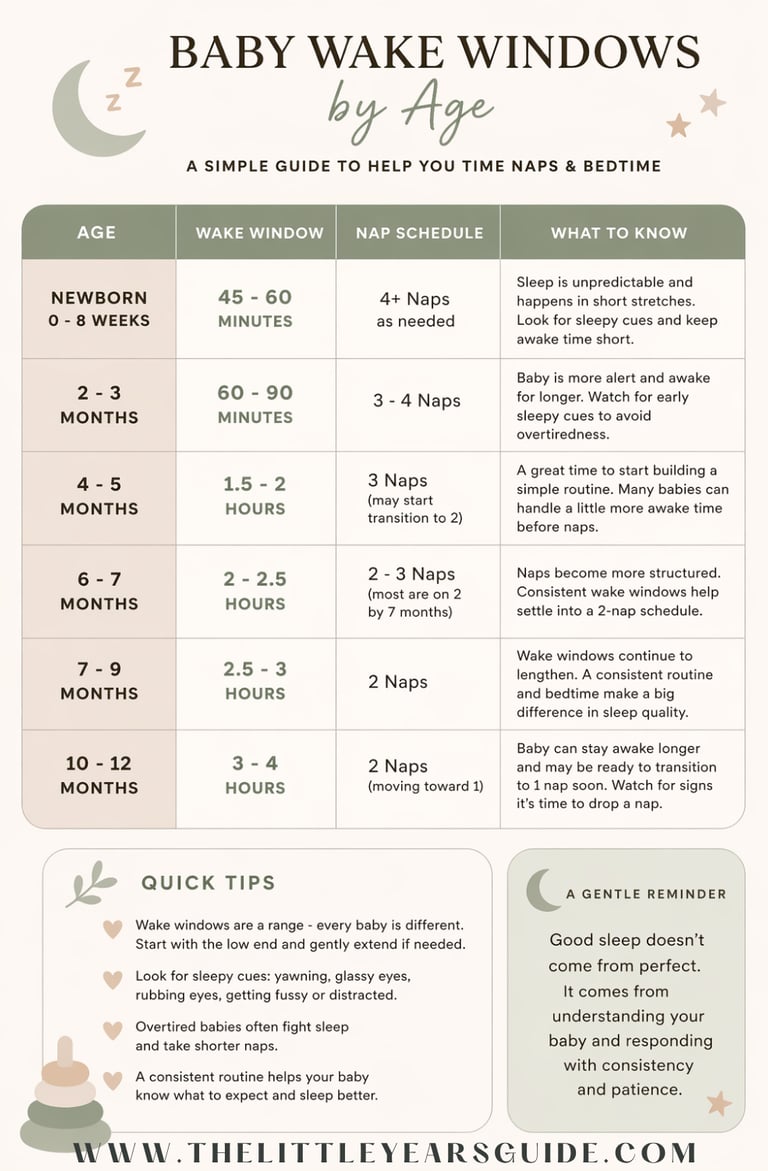
Here’s how it typically looks as your baby grows:
0-1 Months
Wake window: 45–60 minutes
At this stage, everything revolves around feeding and sleep. Wake windows are short, and honestly, things can feel a little all over the place. That’s normal. Focus less on a “schedule” and more on keeping awake time short so your baby doesn’t get overtired.
2–3 Months
Wake window: 60–90 minutes
You’ll start to notice your baby staying awake a bit longer and becoming more alert. This is when sleepy cues really matter—catching them early can make a big difference in how easily your baby goes down for naps.
4–5 Months
Wake window: 1.5–2 hours
This is often the sweet spot to begin a simple routine. Your baby can handle a little more awake time, and patterns start to emerge. Nothing has to be rigid—just consistent enough to help signal sleep.
6–7 Months
Wake window: 2–2.5 hours
Naps become more predictable here, and many babies start transitioning from 3 naps to 2. You’ll likely notice that keeping wake windows consistent helps everything else fall into place a bit easier.
7–9 Months
Wake window: 2.5–3 hours
This stage can feel like a turning point. With more consistency during the day, sleep often becomes more consolidated at night. A solid bedtime routine really starts to pay off here.
10–12 Months
Wake window: 3–4 hours
Your baby can stay awake much longer now, and you may start to see signs they’re getting ready to drop to one nap. Schedules can shift a bit during this time—but that doesn’t mean anything is wrong. It’s just part of the transition.
A Quick Reminder
Wake windows are a range, not a rule. Every baby is different, and some days won’t go as planned—and that doesn’t mean you’re doing anything wrong.
The goal isn’t perfection. It’s having a simple framework that helps your day feel a little more predictable.
Essential Products for Sleep
Looking for more guidance on baby sleep? You're in the right place!
Check out my other articles related to this post:
The Bedtime Routine to Start at 4 Months for Better Sleep
Subscribe!
Stay updated with the latest insights and join our community!
Follow us on Pinterest!
Shop Our Digital Birthday Invitations
The Little Years shares personal experiences and informational content only. This site may contain affiliate links. As an Amazon Associate, I earn from qualifying purchases.