

The 4 Month Sleep Regression: What’s Actually Happening (and How to Survive It)
The 4 month sleep regression is one of the biggest sleep challenges of infancy. Learn the signs of the 4 month sleep regression, why it happens, how long it lasts, recommended wake windows, and practical tips to help your 4 month old sleep better. This complete guide covers frequent night wakings, short naps, bedtime struggles, overtiredness, and gentle sleep routines to help parents survive the 4 month sleep regression with confidence. This post may contain affiliate links, which means The Little Years Guide may earn a small commission at no extra cost to you.
5/16/20264 min read
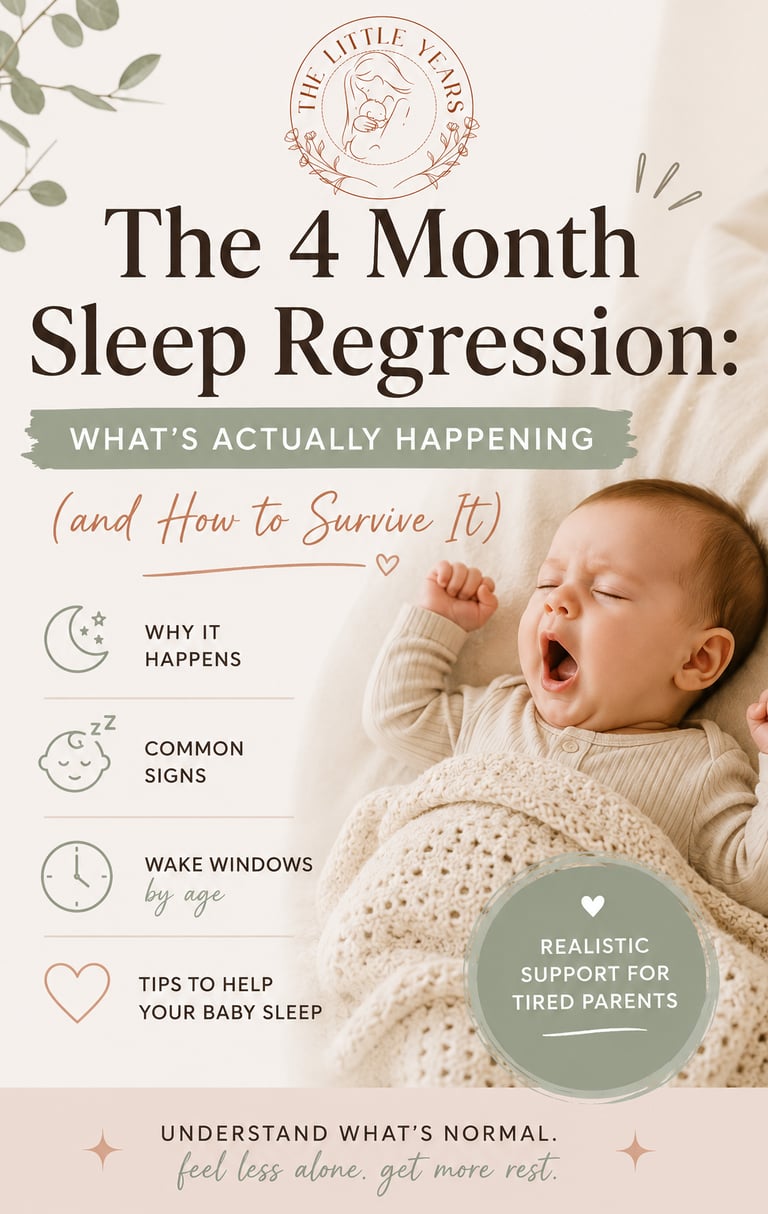
The 4 Month Sleep Regression: What’s Actually Happening (and How to Get Through It)
I do want to preface this with not every baby will go through an obvious regression that will turn your life upside down (like everyone likes to tell you)! BUT, if your baby DOES suddenly go from sleeping relatively well to waking every 1–2 hours overnight, fighting naps, or needing constant soothing to fall asleep — you’re probably in the middle of the infamous 4 month sleep regression. And I promise it's going to be OK.
While it can feel exhausting and discouraging, this stage is actually a major developmental milestone — not a sign that you’re doing anything wrong. The good news? The 4 month sleep regression is temporary, and understanding what’s happening can make it much easier to navigate.
What Is the 4 Month Sleep Regression?
The 4 month sleep regression happens because your baby’s sleep cycles are permanently maturing. Before this stage, newborn sleep is very sleepy and disorganized. Babies drift in and out of deep sleep more easily and can often sleep through movement, noise, or transfers.
Around 3.5–5 months old, your baby’s sleep changes to become more adult-like. Instead of sleeping deeply for long stretches, they now cycle through lighter and deeper stages of sleep every 45–90 minutes. This means they begin partially waking between sleep cycles — and if they relied on rocking, feeding, bouncing, or contact to fall asleep initially, they often need that same help to connect sleep cycles again.
In other words: your baby isn’t suddenly “bad at sleeping.” Their brain is developing exactly as it should.
Common Signs of the 4 Month Sleep Regression
Every baby experiences this stage differently, but common symptoms include:
Suddenly waking more frequently overnight
Fighting naps or taking very short naps
Increased fussiness or overtiredness
Difficulty transferring to the crib
Needing more soothing to fall asleep
Early morning wake-ups
Increased distraction during feeds
Rolling practice or developmental bursts overnight
Some babies experience mild disruptions for a week or two, while others struggle for longer if overtiredness and sleep associations start compounding.
When Does the 4 Month Sleep Regression Start?
Most babies experience it between:
13–19 weeks
Around 3.5–5 months old
For some babies, it seems to happen overnight. For others, sleep gradually becomes more inconsistent over several weeks.
Why Sleep Suddenly Feels Worse
One of the biggest reasons this stage feels so intense is because your baby is no longer sleeping like a newborn — but they also don’t yet know how to independently transition between sleep cycles.
That’s why you may notice:
False starts after bedtime
Waking exactly 45 minutes into naps
Frequent overnight wakings
Increased dependence on rocking or feeding
Your baby is partially waking and looking for the same conditions they had when they originally fell asleep.
Wake Windows Matter More Now
Around 4 months, appropriate wake windows become incredibly important because overtiredness can make sleep fragmentation even worse.
Typical wake windows at this age are:
13–16 weeks: 1.5–2 hours
17–19 weeks: 2–2.5 hours
20–24 weeks: 2–3 hours
Watching sleepy cues alone often becomes less reliable at this age because babies become much more alert and distracted.
How to Survive the 4 Month Sleep Regression
1. Focus on Consistent Wake Windows
Avoiding overtiredness is one of the biggest factors in improving sleep during this stage.
Even if naps are short, try to keep age-appropriate wake windows consistent throughout the day.
Read more on wake windows by month here.
2. Create a Predictable Sleep Routine
Your baby is beginning to recognize patterns now, which means routines become extremely helpful. A simple bedtime routine can look like:
Feed
Diaper + pajamas
Sleep sack
Sound machine
Short book or cuddles
Into crib awake or drowsy
Consistency matters more than perfection. Here is the sleep routine I SWEAR by for creating consistency and good sleep habits.
3. Optimize the Sleep Environment
Around this age, babies become much more sensitive to stimulation. Helpful sleep environment upgrades include:
Blackout curtains
A sound machine
Consistent room temperature
Removing excessive stimulation before naps and bedtime
4. Don’t Panic About Sleep Associations
Many babies still need support to sleep at 4 months, and that’s completely normal. You do not have to immediately sleep train unless you want to and your pediatrician feels your baby is ready. Sometimes simply improving wake windows and consistency dramatically improves sleep on its own.
5. Expect Naps to Be Messy for a While
Short naps are incredibly common during the 4 month stage because naps rely heavily on linking sleep cycles — a skill many babies are still developing. This phase usually improves gradually over the next couple of months.
How Long Does the 4 Month Sleep Regression Last?
The intense phase typically lasts 2–6 weeks. However, because this is a permanent neurological change in sleep structure, some families feel stuck longer if sleep habits and overtiredness continue snowballing.
The good news is that once babies adjust to their new sleep cycles, sleep often becomes much more predictable than it was during the newborn stage.
The Most Important Thing to Remember
The 4 month sleep regression is not a parenting failure. It’s a developmental transition. Your baby is learning an entirely new way of sleeping while simultaneously becoming more aware of the world around them. That’s a huge adjustment. Some nights may feel chaotic. Some naps may completely fall apart. That does not mean you’re creating bad habits or ruining sleep forever.
This stage passes.
And with a little consistency, realistic expectations, and a supportive sleep environment, most families come out the other side with better sleep than before.
Essential Products for Sleep and Getting You Through This Phase
Looking for more guidance on baby sleep? You're in the right place!
Check out my other articles related to this post:
The Bedtime Routine to Start at 4 Months for Better Sleep
Baby Nap Schedule By Age
The Little Years shares personal experiences and informational content only. This site may contain affiliate links. As an Amazon Associate, I earn from qualifying purchases.